
3 reasons why bikeshare systems are dependable and resilient
July 24, 2026 — Lyft Urban Solutions insightsLyft Urban Solutions insights
Bikeshare bikes are built for a life with little to no downtime. From the moment they're deployed, they're outside. Exposed to sun, salt, rain, and thousands of different riders, 24 hours a day, 365 days a year. Building something that holds up under those conditions takes more than good engineering instincts. It takes years of real-world data, custom-built testing rigs, and a relentless focus on the people who rely on these bikes every single day.
Watch how bikes are built and tested
Every component in the Lyft Urban Solutions (LUS) ecosystem — bikes, docks, charging stations, and the software connecting them all — is built to withstand high-frequency shared use. That's a fundamental design challenge that’s very different to building a consumer bike.
"These bikes are basically going to go outside and they're going to stay outside for ten plus years," says Andrew Titus, Senior Engineering Manager. "We're basically trying to condense a lifetime's worth of testing down into sort of weeks and months worth of testing."
That compression of time is what happens inside LUS' lab in San Francisco, a reliable testing space that Mike Kimiecik, Field Quality Engineer, describes as the "above and beyond lab." As he puts it: "This is the lab where we go from baseline standards out to real world conditions, meeting the needs of our customers and pushing ourselves to be a market leader in terms of reliability and durability of our vehicles."
Inside the LUS labs, the team runs tests that go well beyond industry certifications. Environmental chambers cycle through temperature and humidity extremes. A salt spray chamber simulates years of coastal city exposure in a matter of weeks. A rolling bike tester accumulates thousands of miles on vehicles without a single rider in sight. In a dedicated space for moving components, custom rigs cycle individual parts such as cranks, seatpost clamps, and docking triangles, tens of thousands of times to understand exactly when and how they'll wear.
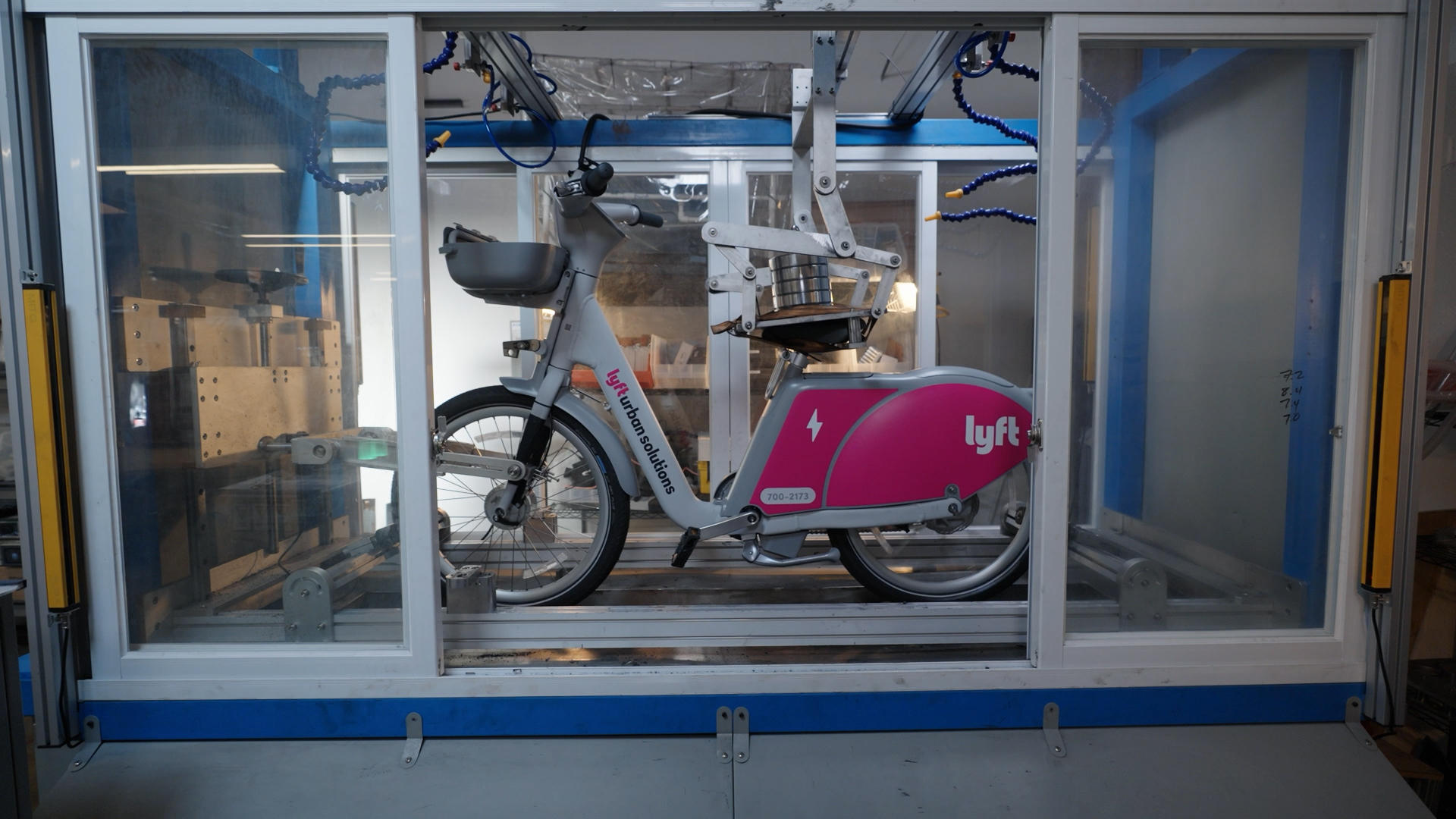
The reason these tests matter, Kimiecik explains, is that existing standards weren't written with bikeshare in mind.
"A lot of what makes consumer biking safe is the fact that it is one bike to one person. In bikeshare, you have a different user taking every single ride, and to guarantee their safety, to guarantee that they have a consistent, reliable experience, we have to fully characterize the vehicle and push it beyond what the minimum standards are."
That same logic extends to street testing. San Francisco serves as the team's primary testing ground, not just for its concentration of engineering talent, but for what Staff Product Manager Benny Wu calls "an amazing mix of bike lane infrastructure": protected lanes, mixed traffic streets, parks, and the city's famously steep hills.
"With the San Francisco hills, we can test to make sure that we have a strong enough boost to handle even the toughest terrain," he says. "And coming back down those hills, you can test the brakes to make sure that the most important safety aspect on the bike is reliable and will work when you need it."
A reliable ride depends on much more than the bike itself. LUS designs bikes, docks, and software to function as a single integrated infrastructure, one where every piece is engineered to keep the system running with maximum uptime.
Central to that is owning the full hardware and software stack in-house. "We own that whole hardware and software stack from the hardware on the bike all the way up to the server," says Andrew Titus, "and therefore can control that experience for our riders and our operators." That control means the team can push over-the-air updates, create custom fault detection, and surface real-time diagnostic data to operations teams, so a bike that needs attention is flagged before it becomes a problem for a rider.
Learn more about our leading technology
"The user group is really everyone who could possibly live in the city," says Erik Askin, Senior Staff Product Designer. To meet the standard, LUS builds to accommodate riders from the 5th to 95th percentile of height, that means anywhere from 4' 11" to 6' 4" (or 1.50 m, to 1.93 m) on a single frame.
For some, hopping on a shared ebike means getting back on a bike for the first time in years. That reality shapes every design decision. "Every touchpoint needs to be considered," he explains, from the seatpost clamp that adjusts at the start of every ride, to the integrated display that guides first-time users through the unlock process. The result, by design, levels the playing field for riders, regardless of their level of experience.
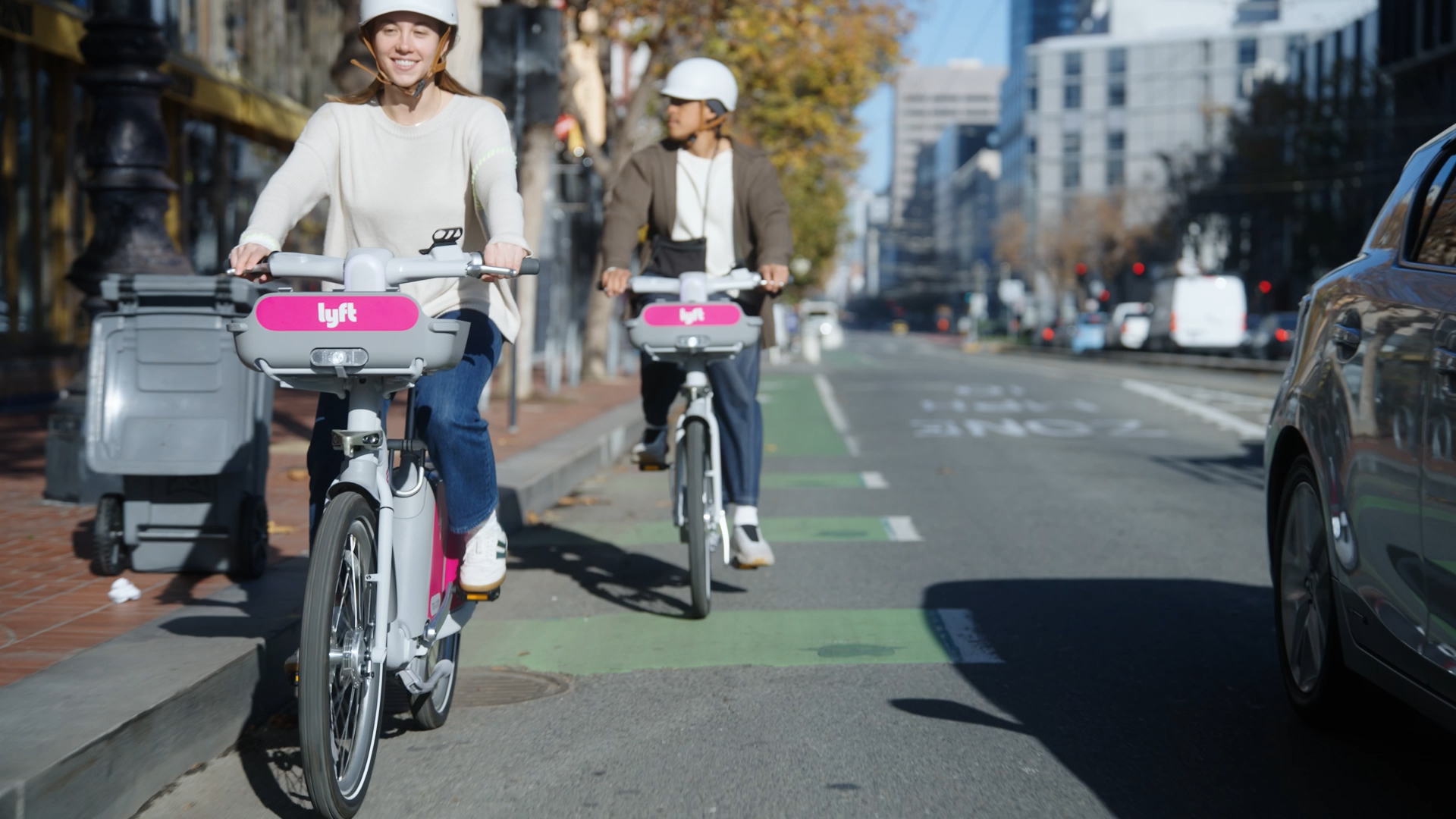
That same attention to touchpoints shows up at the component level. Kimiecik points to the seatpost clamp as a small but telling example, a part adjusted by every new rider, every single ride:
"Thinking about the touchpoints that people come back to over and over again, and making them easier to use, more consistent to use: that's part of how we've grown in developing vehicles."
The strongest case for investing in a resilient bikeshare system isn't found in a lab. It's found on a street corner in New York, watching a steady stream of Citi Bikes roll past; or in San Francisco, where Bay Wheels riders are commuting to work, meeting friends, and reaching parts of the city they'd never explored before.
That's what a well-designed, rigorously tested bikeshare system makes possible: not just mobility, but connection. And it starts with a partner willing to go above and beyond, in the lab and on the street.
Want to see how it all comes together? Go behind the scenes with the LUS engineering and design team in the full video below.


